DeepUnity PACSonWEB Release 3.4.300
Intelligent Reporting, Seamless Interoperability, and Future-Ready Performance
With version 3.4.300, DeepUnity PACSonWEB takes another major step toward intelligent reporting workflows, standardized image exchange, and next-generation platform performance.
This release introduces powerful speech recognition capabilities, expands interoperability through DLX, enhances 3D visualization tools, and reinforces the technological backbone of our cloud platform.
What’s new?
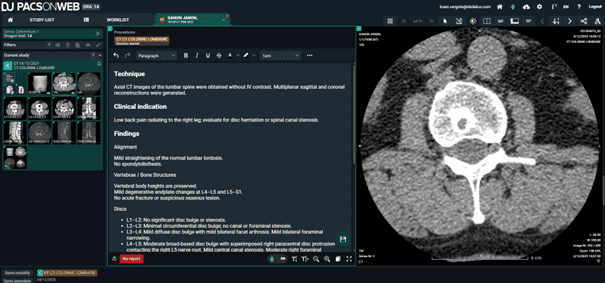
1. Microsoft Dragon Speech Recognition Integration
We are proud to introduce a deep integration with Dragon Medical SpeechKit (DMSK) from Microsoft – one of the most advanced and widely adopted speech recognition platforms in healthcare.
DMSK is a secure, cloud-based solution powered by machine learning and decades of clinical language expertise, supporting 20 languages across more than 30 countries.
Key capabilities:
- Direct Dictation into PACSonWEB: Dictate seamlessly into the rich report editor.
- Structured Reporting Support: Use text macros and anchor (fill-in) fields for faster, standardized reporting.
- Multilingual Reporting: Switch languages within a single report.
- Custom Vocabulary Management: Users can add and manage their own terminology.
- Speech Commands: Control formatting, insert macros, navigate text, and correct content by voice.
- Device Flexibility: Compatible with SpeechMike, headsets, and other dictation devices.
This deep integration enables faster documentation, improved report quality, and a more natural reporting experience.
2. DICOM Link Exchange (DLX – DIN TS 19455)
To support standardized imaging exchange in Germany, PACSonWEB now implements the DICOM Link Exchange (DLX) standard.
DLX addresses a key challenge: patients often store imaging results across multiple portals. Hospitals require a standardized, secure method to access those studies regardless of the originating system.
With PACSonWEB 3.4.300:
- Shared studies automatically generate a standardized DLX code (URL and/or QR code).
- Facilities can securely retrieve imaging results via our newly developed DLX API.
- Access is standardized, automated, and portal-independent.
This significantly simplifies cross-institutional collaboration and strengthens interoperability within the German healthcare ecosystem.
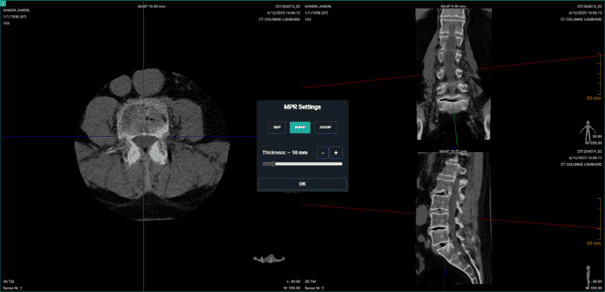
3. DeepUnity Volume Rendering Improvements
Following the introduction of the new DeepUnity Volume Rendering component in the previous release, we now expand its multi-planar reconstruction (MPR) capabilities.
Enhancements include:
- Additional Projection Methods:
- Minimum Intensity Projection (MINIP)
- Average Intensity Projection (AVGIP)
- Window/Level Presets:
Apply presets directly in MPR viewports using keyboard shortcuts.
These improvements further optimize diagnostic precision and workflow efficiency within the embedded 3D environment
4. Under the Hood – Security, Stability & Performance
Beyond visible feature enhancements, we continue to invest heavily in platform robustness and security.
This release includes:
- New DICOM Hub: A modern DICOM hub within our datacenter replaces the legacy DICOM router.
- .NET Core Upgrade: The PACSonWEB viewer now runs on the latest .NET Core technology.
- Security Enhancements: Multiple improvements based on penetration tests and security assessments conducted by external experts and customers.
While not always visible to end users, these investments ensure that PACSonWEB remains secure, scalable, and built on state-of-the-art technology.
Tap into the full potential of cloud-native technologies with DeepUnity PACSonWEB
Best regards,
Dedalus DIIT Innovation Team