Urgent and emergency care faces a wartime scenario. Handover must change
By Dr Bishoy Dimitri, Emergency Medicine Clinician and CCIO, Dedalus
A colleague of mine once broke his foot cycling in a European country recently. He was asked his name, his date of birth and why he had come in – once. Once.
In the NHS, almost every clinical interaction in the emergency setting begins with “What has brought you in today?” The first nurse asks it, and so does every nurse and doctor after. Why is that the case? The status quo must be challenged: data should be collected and entered once, and the technology infrastructure has to support that.
That repetition is a symptom of a system under strain. Urgent and emergency care has reached the highest levels of pressure ever seen in the NHS. As a clinician on the front line, the predicament we face daily is comparable to a wartime scenario.
Three stories landed together this month that illustrate this reality. Hospitals have asked to pause the 45-minute ambulance handover limit. According to NHS England, the average handover in England was 30 minutes 23 seconds in September, the slowest since February. Healthcare Inspectorate Wales has also warned that delayed handovers are a serious risk.
Patients presenting to us are sicker, requiring higher acuity care and longer treatment times, both in the Emergency Department and as inpatients. It is now routine to see patients ‘bedded down’ in emergency departments for hours past the four-hour target. This creates a severe backlog, leaving patients waiting in ambulances outside before they can be offloaded into a rammed department.
It is no longer uncommon to treat patients in corridors or see them lying on ambulance trolleys waiting for space to be seen. But the risk isn’t just delayed care for those waiting inside for a doctor. It also creates dangerous delays for those lying on pavements or waiting at home for an ambulance to arrive.
What connected records and lighter documentation can do
Logistical space in emergency departments is a major part of the puzzle, and technology alone cannot build extra rooms. However, with better system integration, a patient’s handover from ambulance to triage nurse should be completely seamless.
Currently, ambulance crews document at the scene, bring the patient to the hospital, and give a verbal handover. The triage nurse then transcribes it again before starting the hospital emergency care pathway. Why are we doing this? By streamlining the technology handoff alongside the clinical handover, we can minimise or eliminate this duplicated transcribing effort. Nurses can then focus on starting triage, coordinating an early treatment plan, and delivering care rather than acting as administrators filling forms.
The same principle applies before the patient reaches us. Having direct access to GP records through connected systems equips paramedics to make clinically sound judgements, regardless of the patient’s level of consciousness. Knowing baseline observations, diagnoses, medications, and allergies helps crews deliver the best possible care from the moment they arrive.
Standards are essential for supporting information exchange. Adhering to the PRSB Ambulance Handover to Emergency Care Standard helps ensure key details follow the patient directly to the emergency department.
Reducing the pressure on staff
The pressures in our system stem from delays in care, not from administrative losses. We must focus on freeing up time for clinical staff to do what they were trained to do, rather than acting as pencil pushers. Ambulance service providers must ensure their systems support paramedics rather than hinder them. In an emergency setting, every second counts.
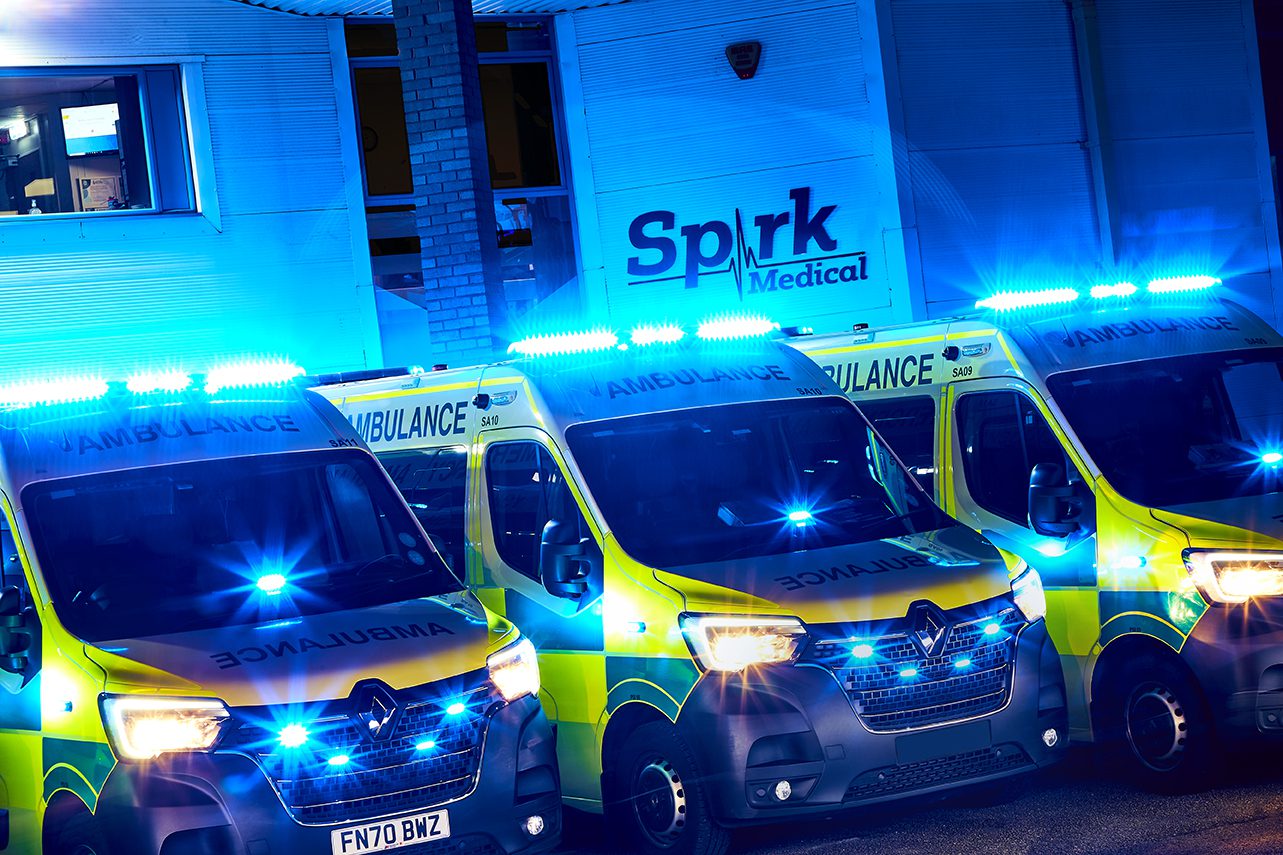
Spark Medical reports that moving from paper to Dedalus OneResponse has saved up to 80 hours a month in administration. For clinicians in high-intensity roles, less paperwork should ease the cognitive burden. However, leaders must ensure that saved time translates into real productivity gains while balancing the fundamentals, such as ensuring staff actually get a break.
When staff are pushed to the brink by increasingly common scenarios, lighter documentation and connected systems aren’t just administrative upgrades. They can help protect clinicians from burnout.
Technology only helps if clinicians choose to use it. North West Ambulance Service’s maternity decision support, built into its OneResponse electronic patient record, was highly commended at the HSJ Patient Safety Awards, and crews used it in more than 85 per cent of maternity-related incidents in its first three months. Like the stethoscope, ancient and still widely used, the EPR needs to be a tool that supports and helps clinicians to deliver care better.
Where next
Handover should no longer be a transcription of what has already been documented. It should be a continuation of a single patient record. Patients would have a better experience of care, without repeating themselves hundreds of times, and clinicians could focus on the patient, not the arduous burden of re-entering information.
The question for every trust and supplier is simple: where, in a patient’s journey, is the same information still being entered more than once? That is where to start. In that European country, it was asked once. It should be the same here.